Sunday, 1 March 2015

Free Mobile Wallpapers Download Wallpaper Download For Mobile Free Hd for Mobile Free Image Search for Pc Love Hd 3d free For Mobile
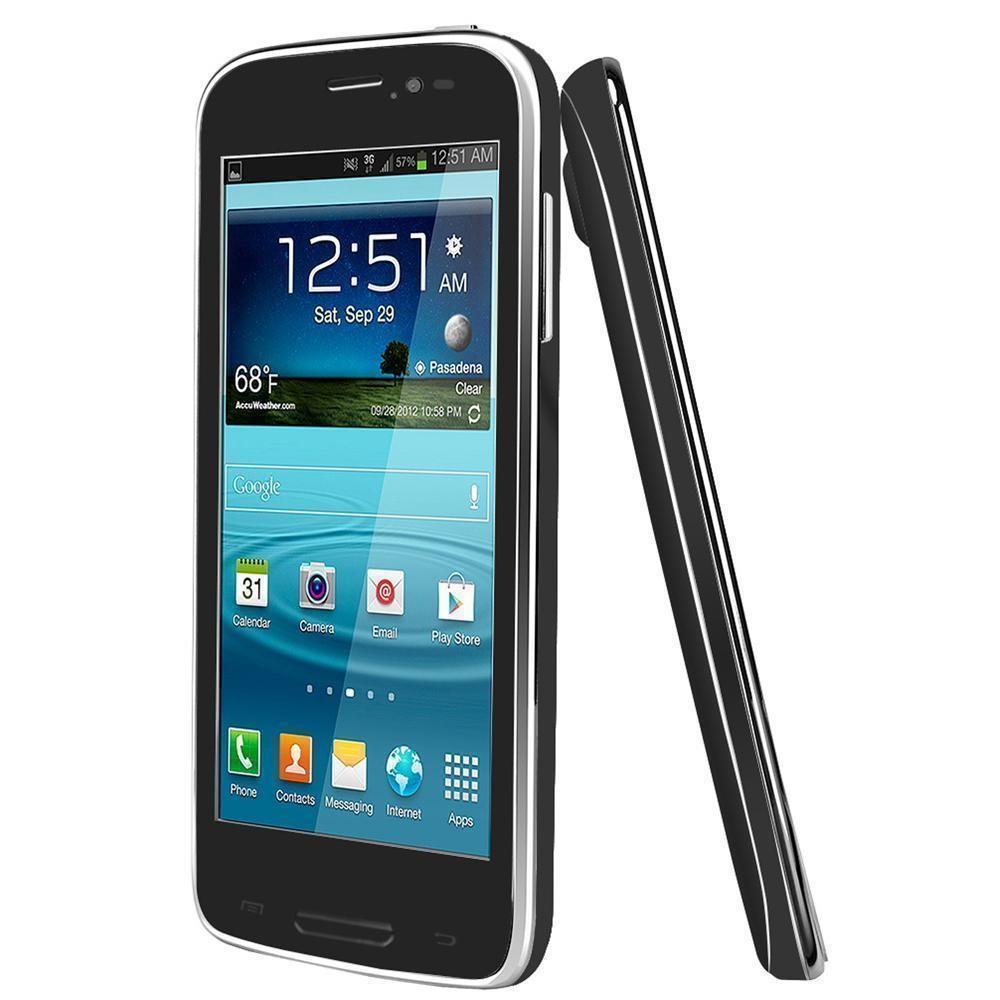
 Mobile Wallpapers Biograhy


Source:- Google.com.pk


A mobile phone (also known as a cellular phone, cell phone, hand phone, or simply a phone) is a phone that can make and receivetelephone calls over a radio link while moving around a wide geographic area. It does so by connecting to a cellular network provided by amobile phone operator, allowing access to the public telephone network. By contrast, a cordless telephone is used only within the short range of a single, private base station.
In addition to telephony, modern mobile phones also support a wide variety of other services such as text messaging, MMS, email, Internet access, short-range wireless communications (infrared, Bluetooth), business applications, gaming, and photography. Mobile phones that offer these and more general computing capabilities are referred to as smartphones.
The first hand-held cell phone was demonstrated by John F. Mitchell[1][2] and Dr. Martin Cooper of Motorola in 1973, using a handset weighing around 4.4 pounds (2 kg).[3] In 1983, the DynaTAC 8000x was the first to be commercially available. From 1983 to 2014, worldwide mobile phone subscriptions grew from zero to over 7 billion, penetrating 100% of the global population and reaching the bottom of the economic pyramid.[4] In 2014, the top cell phone manufacturers were Samsung, Nokia, Apple, and LG
A hand-held mobile radiotelephone is an old dream of radio engineering. One of the earliest descriptions can be found in the 1948 science fiction novel Space Cadet by Robert Heinlein. The protagonist, who has just traveled to Colorado from his home in Iowa, receives a call from his father on a telephone in his pocket. Before leaving for earth orbit, he decides to ship the telephone home "since it was limited by its short range to the neighborhood of an earth-side [i.e. terrestrial] relay office." Ten years later, an essay by Arthur C. Clarke envisioned a "personal transceiver, so small and compact that every man carries one." Clarke wrote: "the time will come when we will be able to call a person anywhere on Earth merely by dialing a number." Such a device would also, in Clarke's vision, include means for global positioning so that "no one need ever again be lost." Later, in Profiles of the Future, he predicted the advent of such a device taking place in the mid-1980s.[6]
Early predecessors of cellular phones included analog radio communications from ships and trains. The race to create truly portable telephone devices began after World War II, with developments taking place in many countries. The advances in mobile telephony have been traced in successive generations from the early "0G" (zeroth generation) services like the Bell System's Mobile Telephone Service and its successor, Improved Mobile Telephone Service. These "0G" systems were not cellular, supported few simultaneous calls, and were very expensive.
The first handheld mobile cell phone was demonstrated by Motorola in 1973. The first commercial automated cellular network was launched in Japan by NTT in 1979. In 1981, this was followed by the simultaneous launch of the Nordic Mobile Telephone (NMT) system in Denmark, Finland, Norway and Sweden.[7] Several other countries then followed in the early to mid-1980s. These first generatiion ("1G") systems could support far more simultaneous calls, but still used analog technology.
In 1991, the second generation (2G) digital cellular technology was launched in Finland by Radiolinja on the GSM standard, which sparked competition in the sector, as the new operators challenged the incumbent 1G network operators.
Ten years later, in 2001, the third generation (3G) was launched in Japan by NTT DoCoMo on the WCDMA standard.[8] This was followed by 3.5G, 3G+ or turbo 3G enhancements based on the high-speed packet access (HSPA) family, allowing UMTS networks to have higher data transfer speeds and capacity.
By 2009, it had become clear that, at some point, 3G networks would be overwhelmed by the growth of bandwidth-intensive applications like streaming media.[9] Consequently, the industry began looking to data-optimized 4th-generation technologies, with the promise of speed improvements up to 10-fold over existing 3G technologies. The first two commercially available technologies billed as 4G were the WiMAX standard (offered in the U.S. by Sprint) and the LTE standard, first offered in Scandinavia by TeliaSonera.
Features

Main article: Mobile phone features
See also: Smartphone
All mobile phones have a number of features in common, but manufacturers also try to differentiate their own products by implementing additional functions to make them more attractive to consumers. This has led to great innovation in mobile phone development over the past 20 years.
The common components found on all phones are:
A battery, providing the power source for the phone functions.
An input mechanism to allow the user to interact with the phone. The most common input mechanism is a keypad, but touch screens are also found in most smartphones.
A screen which echoes the user's typing, displays text messages, contacts and more.
Basic mobile phone services to allow users to make calls and send text messages.
All GSM phones use a SIM card to allow an account to be swapped among devices. Some CDMA devices also have a similar card called a R-UIM.
Individual GSM, WCDMA, iDEN and some satellite phone devices are uniquely identified by an International Mobile Equipment Identity (IMEI) number.
Low-end mobile phones are often referred to as feature phones, and offer basic telephony. Handsets with more advanced computing ability through the use of native software applications became known as smartphones.
Several phone series have been introduced to address a given market segment, such as the RIM BlackBerry focusing on enterprise/corporate customer email needs; the Sony-Ericsson 'Walkman' series of music/phones and 'Cybershot' series of camera/phones; the Nokia Nseries of multimedia phones, the Palm Pre the HTC Dream and the AppleiPhone.

Free Mobile Wallpapers Download Wallpaper Download For Mobile Free Hd for Mobile Free Image Search for Pc Love Hd 3d free For Mobile

Free Mobile Wallpapers Download Wallpaper Download For Mobile Free Hd for Mobile Free Image Search for Pc Love Hd 3d free For Mobile


Free Mobile Wallpapers Download Wallpaper Download For Mobile Free Hd for Mobile Free Image Search for Pc Love Hd 3d free For Mobile

Free Mobile Wallpapers Download Wallpaper Download For Mobile Free Hd for Mobile Free Image Search for Pc Love Hd 3d free For Mobile

Free Mobile Wallpapers Download Wallpaper Download For Mobile Free Hd for Mobile Free Image Search for Pc Love Hd 3d free For Mobile

Free Mobile Wallpapers Download Wallpaper Download For Mobile Free Hd for Mobile Free Image Search for Pc Love Hd 3d free For Mobile

Free Mobile Wallpapers Download Wallpaper Download For Mobile Free Hd for Mobile Free Image Search for Pc Love Hd 3d free For Mobile

Free Mobile Wallpapers Download Wallpaper Download For Mobile Free Hd for Mobile Free Image Search for Pc Love Hd 3d free For Mobile

Free Mobile Wallpapers Download Wallpaper Download For Mobile Free Hd for Mobile Free Image Search for Pc Love Hd 3d free For Mobile

Free Mobile Wallpapers Download Wallpaper Download For Mobile Free Hd for Mobile Free Image Search for Pc Love Hd 3d free For Mobile


Free Mobile Wallpapers Download Wallpaper Download For Mobile Free Hd for Mobile Free Image Search for Pc Love Hd 3d free For Mobile

Desktop Wallpaper Download Wallpaper Download For Mobile Free Hd for Mobile Free Image Search for Pc Love Hd 3d free For Mobile

Desktop Wallpaper Biograhy

Source:- Google.com.pk
This is the second book of the spin-off House of Night Novellas series, featuring Lenobia.
In Évreux, France, in 1788, Lenobia is the bastard daughter of a powerful baron. Following the death of his legitimate daughter, Cecile, she agrees to play her role and marry her intended in the Americas. Upon reaching the boat, she learns to her dismay that the bishop of Évreux will come, too. She avoids him, pretending to be seasick and while searching the ship uncovers a pair of Percheron horses and comes to befriend their Creole caretaker, Martin. As the days pass they fall in love and upon landing he vows to follow her.
On the way the convoy meets a vampire who Marks Lenobia. Angered, the bishop tries to kill her and uses his dark power over fire, but is ultimately killed by Martin, who dies too. Lenobia is traumatized, but quickly discovers an affinity for horses. She finds the strength to move on, vowing to wait for Marti
This is the third book of the spin-off House of Night Novellas series, about Neferet's past.
The White City, 1893: In turn-of-the-century Chicago, with the World’s Fair bringing bustle and excitement to her home city, sixteen-year-old Emily Wheiler should be reveling in her youthful beauty and the excitement around her. But her whole life changed when her mother died, leaving her to be the Lady of Wheiler House. Her father, a powerful bank president, is at the center of an important social hub for the booming young city, and he needs Emily to do everything her mother would have – to be a good hostess and make sure the mansion runs smoothly.
As Emily uneasily tries to replace her mother, she also longs for more… for love and a life of her own. When a handsome young man notices her at one of her father’s parties, it seems that her hopes may finally be coming true. Until her father forbids her to see him – or any other man – and starts revealing a darkly violent side that even he can’t understand.
At last, afraid for her life and with nowhere to turn, Emily is Marked by a vampyre and brought to the Chicago House of Night, where she begins a magickal new life that should allow the wounds from her past to heal. But as she gains strength, and a powerful new name, she carries a dark need to wreak vengeance on the man she trusted most.
From victim to High Priestess, beautiful young woman to powerful seductress, Neferet's journey begins.
A divination card deck made by Pc Cast and Colette Baron Reid. Tarot of House of Night series, on sale 2 October 2012. For the fans of the enormously popular House of Night series, the Oracle of Nyx Deck provides a unique interactive experience with the vampire goddesses and spirits in the books. This deck is a collaboration between P.C. Cast (whose House of Night titles have over seven million copies in print), and oracle expert Collette Baron-Reid. The product will be available in both print and electronic versions, and will go on sale simultaneously with HIDDEN, P.C. Cast's 10th hardcover in the series.
The Oracle of Nyx deck is an original divination system that was created specifically as a companion to the House of Night series. Readers are invited to pose questions to the goddess Nyx and draw an oracle card to receive guidance. Internationally known intuitive counselor and bestselling author Colette Baron-Reid, together with #1 New York Times and USA Today bestselling author P.C. Cast, the creator of the House of Night series, have joined forces in order to create an original 50-card deck that is inspired by a number of ancient divination systems, such as the Tarot, Norse runes, and the I-Ching.

Desktop Wallpaper Download Wallpaper Download For Mobile Free Hd for Mobile Free Image Search for Pc Love Hd 3d free For Mobile

Desktop Wallpaper Download Wallpaper Download For Mobile Free Hd for Mobile Free Image Search for Pc Love Hd 3d free For Mobile


Desktop Wallpaper Download Wallpaper Download For Mobile Free Hd for Mobile Free Image Search for Pc Love Hd 3d free For Mobile

Desktop Wallpaper Download Wallpaper Download For Mobile Free Hd for Mobile Free Image Search for Pc Love Hd 3d free For Mobile

Desktop Wallpaper Download Wallpaper Download For Mobile Free Hd for Mobile Free Image Search for Pc Love Hd 3d free For Mobile

Desktop Wallpaper Download Wallpaper Download For Mobile Free Hd for Mobile Free Image Search for Pc Love Hd 3d free For Mobile

Desktop Wallpaper Download Wallpaper Download For Mobile Free Hd for Mobile Free Image Search for Pc Love Hd 3d free For Mobile

Desktop Wallpaper Download Wallpaper Download For Mobile Free Hd for Mobile Free Image Search for Pc Love Hd 3d free For Mobile

Desktop Wallpaper Download Wallpaper Download For Mobile Free Hd for Mobile Free Image Search for Pc Love Hd 3d free For Mobile


Desktop Wallpaper Download Wallpaper Download For Mobile Free Hd for Mobile Free Image Search for Pc Love Hd 3d free For Mobile


Desktop Wallpaper Download Wallpaper Download For Mobile Free Hd for Mobile Free Image Search for Pc Love Hd 3d free For Mobile


Free Wallpaper Download for Pc Wallpaper Download For Mobile Free Hd for Mobile Free Image Search for Pc Love Hd 3d free For Mobile

Pc Wallpaper  Biography


Source:- Google.com.pk


One of the first great autobiographies of the Renaissance is that of the sculptor and goldsmith Benvenuto Cellini (1500–1571), written between 1556 and 1558, and entitled by him simply Vita (Italian: Life). He declares at the start: "No matter what sort he is, everyone who has to his credit what are or really seem great achievements, if he cares for truth and goodness, ought to write the story of his own life in his own hand; but no one should venture on such a splendid undertaking before he is over forty."[3] These criteria for autobiography generally persisted until recent times, and most serious autobiographies of the next three hundred years conformed to them.
Another autobiography of the period is De vita propria, by the Italian mathematician, physician and astrologer Gerolamo Cardano (1574).
The earliest known autobiography in English is the early 15th-century Book of Margery Kempe, describing among other things Kempe'spilgrimage to the Holy Land and visit to Rome. The book remained in manuscript and was not published until 1936.
Notable English autobiographies of the 17th century include those of Lord Herbert of Cherbury (1643, published 1764) and John Bunyan(Grace Abounding to the Chief of Sinners, 1666).
§Memoirs[edit]

Main article: Memoir
A memoir is slightly different in character from an autobiography. While an autobiography typically focuses on the "life and times" of the writer, a memoir has a narrower, more intimate focus on his or her own memories, feelings and emotions. Memoirs have often been written by politicians or military leaders as a way to record and publish an account of their public exploits.
One early example is that of Julius Caesar's Commentarii de Bello Gallico, also known as Commentaries on the Gallic Wars. In the work, Caesar describes the battles that took place during the nine years that he spent fighting local armies in the Gallic Wars. His second memoir, Commentarii de Bello Civili (or Commentary on the Civil War) is an account of the events that took place between 49 and 48 BC in the civil war against Gnaeus Pompeius and the Senate.
Leonor López de Córdoba (1362–1420) wrote what is supposed to be the first autobiography in Spanish. The English Civil War (1642–1651) provoked a number of examples of this genre, including works by Sir Edmund Ludlow and Sir John Reresby. French examples from the same period include the memoirs of Cardinal de Retz (1614–1679) and theDuc de Saint-Simon.
§18th and 19th centuries[edit]

Notable 18th-century autobiographies in English include those of Edward Gibbon and Benjamin Franklin. Following the trend of Romanticism, which greatly emphasised the role and the nature of the individual, and in the footsteps of Jean-Jacques Rousseau's Confessions, a more intimate form of autobiography, exploring the subject's emotions, came into fashion. An English example is William Hazlitt's Liber Amoris (1823), a painful examination of the writer's love-life.
With the rise of education, cheap newspapers and cheap printing, modern concepts of fame and celebrity began to develop, and the beneficiaries of this were not slow to cash in on this by producing autobiographies. It became the expectation—rather than the exception—that those in the public eye should write about themselves—not only writers such asCharles Dickens (who also incorporated autobiographical elements in his novels) and Anthony Trollope, but also politicians (e.g. Henry Brooks Adams), philosophers (e.g. John Stuart Mill), churchmen such as Cardinal Newman, and entertainers such as P. T. Barnum. Increasingly, in accordance with romantic taste, these accounts also began to deal, amongst other topics, with aspects of childhood and upbringing—far removed from the principles of "Cellinian" autobiography.
§20th and 21st centuries[edit]

From the 17th century onwards, "scandalous memoirs" by supposed libertines, serving a public taste for titillation, have been frequently published. Typically pseudonymous, they were (and are) largely works of fiction written by ghostwriters. So-called "autobiographies" of modern professional athletes and media celebrities—and to a lesser extent about politicians, generally written by a ghostwriter, are routinely published. Some celebrities, such as Naomi Campbell, admit to not having read their "autobiographies".[citation needed]. Some sensationalist autobiographies such as James Frey's "A Million Little Pieces" have been publicly exposed as having embellished or fictionalized significant details of the authors' lives.
Autobiography has become an increasingly popular and widely accessible form. With the critical and commercial success in the United States of such memoirs as Angela’s Ashesand The Color of Water, more and more people have been encouraged to try their hand at this genre.
Victims and opponents of totalitarian and other governmental regimes have been able to present striking critiques of these regimes through autobiographical accounts of their experience. Among such works are the writings of Primo Levi, one of many personal accounts of the Shoah. Similarly, there are many works detailing atrocities and malevolence of Communist regimes (e.g., Nadezhda Mandelstam's Hope against Hope).
§Nature of autobiography[edit]

Autobiographical works are by nature subjective. The inability—or unwillingness—of the author to accurately recall memories has in certain cases resulted in misleading or incorrect information. Some sociologists and psychologists have noted that autobiography offers the author the ability to recreate history.[4]
§Fictional autobiography[edit]

The term "fictional autobiography" signifies novels about a fictional character written as though the character were writing their own autobiography, meaning that the character is the first-person narrator and that the novel addresses both internal and external experiences of the character. Daniel Defoe's Moll Flanders is an early example. Charles Dickens'David Copperfield is another such classic, and J.D. Salinger's The Catcher in the Rye is a well-known modern example of fictional autobiography. Charlotte Brontë's Jane Eyre is yet another example of fictional autobiography, as noted on the front page of the original version. The term may also apply to works of fiction purporting to be autobiographies of real characters, e.g., Robert Nye's Memoirs of Lord Byron.


Free Wallpaper Download for Pc Wallpaper Download For Mobile Free Hd for Mobile Free Image Search for Pc Love Hd 3d free For Mobile


Free Wallpaper Download for Pc Wallpaper Download For Mobile Free Hd for Mobile Free Image Search for Pc Love Hd 3d free For Mobile


Free Wallpaper Download for Pc Wallpaper Download For Mobile Free Hd for Mobile Free Image Search for Pc Love Hd 3d free For Mobile


Free Wallpaper Download for Pc Wallpaper Download For Mobile Free Hd for Mobile Free Image Search for Pc Love Hd 3d free For Mobile


Free Wallpaper Download for Pc Wallpaper Download For Mobile Free Hd for Mobile Free Image Search for Pc Love Hd 3d free For Mobile


Free Wallpaper Download for Pc Wallpaper Download For Mobile Free Hd for Mobile Free Image Search for Pc Love Hd 3d free For Mobile


Free Wallpaper Download for Pc Wallpaper Download For Mobile Free Hd for Mobile Free Image Search for Pc Love Hd 3d free For Mobile


Free Wallpaper Download for Pc Wallpaper Download For Mobile Free Hd for Mobile Free Image Search for Pc Love Hd 3d free For Mobile


Free Wallpaper Download for Pc Wallpaper Download For Mobile Free Hd for Mobile Free Image Search for Pc Love Hd 3d free For Mobile


Free Wallpaper Download for Pc Wallpaper Download For Mobile Free Hd for Mobile Free Image Search for Pc Love Hd 3d free For Mobile


Free Wallpaper Download for Pc Wallpaper Download For Mobile Free Hd for Mobile Free Image Search for Pc Love Hd 3d free For Mobile


Pc Wallpaper Download Wallpaper Download For Mobile Free Hd for Mobile Free Image Search for Pc Love Hd 3d free For Mobile

Pc Wallpaper Biography


Source:- Google.com.pk
VAIO Corporation (/ˈvaɪ.oʊ/, standing for Visual Audio Intelligent Organizer) is a manufacturer of personal computers. Vaio was originally a brand of Sony Corporation, introduced in 1996. Sony sold its PC business to the investment firm Japan Industrial Partners in February 2014 as part of a restructuring of the corporation to focus on mobile devices. Sony maintains a minority stake in the new, independent company, which currently sells computers only in Japan.
Originally an acronym of Video Audio Integrated Operation, this was amended to Visual Audio Intelligent Organizer in 2008 to celebrate the brand's 10th anniversary.[1] The logo concept was created by Teiyu Goto, supervisor of product design from the Sony Creative Center in Tokyo. He incorporated many meanings into the logo and acronym: the pronunciation is similar to "bio", which is symbolic of life and the product's future evolution; it's also near "violet", which is why most early Vaios were purple or included purple components. The sound some Vaio models make when starting up is derived from the melody created when pressing a telephone keypad to spell the letters V-A-I-O
Although Sony made computers in the 1980s exclusively for the Japanese market, the company withdrew from the computer business around the beginning of the 1990s. Sony's re-entry into the global computer market, under the new Vaio brand, began in 1996 with the PCV series of desktops—the PCV-90 was designed with a 3D graphical interface as a novelty for new users. The first generation of Vaio laptop computers was released in 1997 and the US$2,000 PCG-505 model was designed to be “SuperSlim,” and was housed in a four-panel magnesium body.[4]
Sony Vaio's latest designs were released during a period of low PC sales and included models with innovations such as magnetized stands and the Vaio Tap, which was designed with a completely separate keyboard. The latest models were complemented by theWindows 8 operating system.[4]
On 4 February 2014, Sony announced that it would sell its Vaio PC business due to poor sales[5] and Japanese company Japan Industrial Partners (JIP) will purchase the Vaio brand, with the deal finalized by the end of March 2014.[6][7] Sony will maintain a 5 percent stake in the new company, and still sell VAIO products through its online stores. On June 27 2014 Sony added VAIO PCs and Accessories from the US online store.
The sale was closed on 1 July 2014; on the same day, VAIO announced refreshed entries in the VAIO Fit and Pro lines. The re-launched company will, initially, only distribute products in Japan.[8]
Sony Corp. has expanded its use of the Vaio brand, which can now be found on notebooks, subnotebooks, desktops and media centres. Network media solutions by Sony will also carry the Vaio brand. (2009)
Vaio notebooks are currently shipped with Microsoft Windows 8 or with Windows 8 Pro
In mid-2005 a hidden partition on the hard drive, accessible at boot via the BIOS or within Windows via a utility is used instead of recovery media for many Vaio laptops. Pressing [F10] at the Vaio logo during boot-up will cause the notebook to boot from the recovery partition; where the user has the choice of either running hardware diagnostics without affecting the installed system, or restoring (re-imaging) the hard drive to factory condition – an option that destroys all user installed applications and data). When first running a Vaio system out of the box, users are prompted to create a set of recovery DVDs, which will be required in case of hard disk failure and replacement with a new drive. In cases where the system comes with Windows 7 64 bit pre-installed, the provided recovery media restores the system to Windows 7 32 or 64 bit. Therefore, the user must create their own recovery disks.


Pc Wallpaper Download Wallpaper Download For Mobile Free Hd for Mobile Free Image Search for Pc Love Hd 3d free For Mobile

Pc Wallpaper Download Wallpaper Download For Mobile Free Hd for Mobile Free Image Search for Pc Love Hd 3d free For Mobile


Pc Wallpaper Download Wallpaper Download For Mobile Free Hd for Mobile Free Image Search for Pc Love Hd 3d free For Mobile

Pc Wallpaper Download Wallpaper Download For Mobile Free Hd for Mobile Free Image Search for Pc Love Hd 3d free For Mobile

Pc Wallpaper Download Wallpaper Download For Mobile Free Hd for Mobile Free Image Search for Pc Love Hd 3d free For Mobile

Pc Wallpaper Download Wallpaper Download For Mobile Free Hd for Mobile Free Image Search for Pc Love Hd 3d free For Mobile

Pc Wallpaper Download Wallpaper Download For Mobile Free Hd for Mobile Free Image Search for Pc Love Hd 3d free For Mobile

Pc Wallpaper Download Wallpaper Download For Mobile Free Hd for Mobile Free Image Search for Pc Love Hd 3d free For Mobile

Pc Wallpaper Download Wallpaper Download For Mobile Free Hd for Mobile Free Image Search for Pc Love Hd 3d free For Mobile

Pc Wallpaper Download Wallpaper Download For Mobile Free Hd for Mobile Free Image Search for Pc Love Hd 3d free For Mobile

Pc Wallpaper Download Wallpaper Download For Mobile Free Hd for Mobile Free Image Search for Pc Love Hd 3d free For Mobile


Free Animated Wallpaper Download Wallpaper Download For Mobile Free Hd for Mobile Free Image Search for Pc Love Hd 3d free For Mobile

Animated Wallpaper Biography


Source:- Google.com.pk
An autostereogram is a single-image stereogram (SIS), designed to create the visual illusion of a three-dimensional (3D) scene from a two-dimensional image. In order to perceive 3D shapes in these autostereograms, one must overcome the normally automatic coordination between accommodation (focus) and horizontal vergence (angle of one's eyes). The illusion is one of depth perception and involves stereopsis: depth perception arising from the different perspective each eye has of a three-dimensional scene, called binocular parallax.
The simplest type of autostereogram consists of horizontally repeating patterns (often separate images) and is known as awallpaper autostereogram. When viewed with proper convergence, the repeating patterns appear to float above or below the background. The well-known Magic Eye books feature another type of autostereogram called a random dot autostereogram. One such autostereogram is illustrated above right. In this type of autostereogram, every pixel in the image is computed from a pattern strip and a depth map. A hidden 3D scene emerges when the image is viewed with the correct convergence.
Autostereograms are similar to normal stereograms except they are viewed without a stereoscope. A stereoscope presents 2D images of the same object from slightly different angles to the left eye and the right eye, allowing us to reconstruct the original object via binocular disparity. When viewed with the proper vergence, an autostereogram does the same, the binocular disparity existing in adjacent parts of the repeating 2D patterns.
There are two ways an autostereogram can be viewed: wall-eyed and cross-eyed.[a] Most autostereograms (including those in this article) are designed to be viewed in only one way, which is usually wall-eyed. Wall-eyed viewing requires that the two eyes adopt a relatively parallel angle, while cross-eyed viewing requires a relatively convergent angle. An image designed for wall-eyed viewing if viewed correctly will appear to pop out of the background, while if viewed cross-eyed it will instead appear as a cut-out behind the background and may be difficult to bring entirely into focus
In 1838, the British scientist Charles Wheatstone published an explanation of stereopsis (binocular depth perception) arising from differences in the horizontal positions of images in the two eyes. He supported his explanation by showing pictures with such horizontal differences, stereograms, separately to the left and right eyes through a stereoscope he invented based on mirrors. When people looked at these flat, two-dimensional pictures, they experienced the illusion of three-dimensional depth.[2][3]
Between 1849 and 1850, David Brewster, a Scottish scientist, improved the Wheatstone stereoscope by using lenses instead of mirrors, thus reducing the size of the device.[4]
Brewster also discovered the "wallpaper effect". He noticed that staring at repeated patterns in wallpapers could trick the brain into matching pairs of them as coming from the same virtual object on a virtual plane behind the walls. This is the basis of wallpaper-style "autostereograms" (also known as single-image stereograms).[2]
In 1939 Boris Kompaneysky[5] published the first random dot stereogram containing an image of the face of Venus,[6] intended to be viewed with a device.
In 1959, Bela Julesz,[7][8] a vision scientist, psychologist and MacArthur Fellow, invented the random dot stereogram while working at Bell Laboratories on recognizing camouflaged objects from aerial pictures taken by spy planes. At the time, many vision scientists still thought that depth perception occurred in the eye itself, whereas now it is known to be a complex neurological process. Julesz used a computer to create a stereo pair of random-dot images which, when viewed under a stereoscope, caused the brain to see 3D shapes. This proved that depth perception is a neurological process.[9][10]
Japanese designer Masayuki Ito, following Julesz, created a single image stereogram in 1970 and Swiss painter Alfons Schilling created a handmade single-image stereogram in 1974,[6] after creating more than one viewer and meeting with Julesz.[11] Having experience with stereo imaging in holography, lenticular photography, and vectography, he developed a random-dot method based on closely spaced vertical lines in parallax.[12]
In 1979, Christopher Tyler of Smith-Kettlewell Institute, a student of Julesz and a visual psychophysicist, combined the theories behind single-image wallpaper stereograms and random-dot stereograms (the work of Julesz and Schilling) to create the first black-and-white "random-dot autostereogram" (also known as single-image random-dot stereogram) with the assistance of computer programmer Maureen Clarke using Apple II and BASIC.[13] This type of autostereogram allows a person to see 3D shapes from a single 2D image without the aid of optical equipment.[14][15] In 1991 computer programmer Tom Baccei and artist Cheri Smith created the first color random-dot autostereograms, later marketed as Magic Eye.[16]
A computer procedure that extracts back the hidden geometry out of an autostereogram image was described by Ron Kimmel.[17] In addition to classical stereo it adds smoothness as an important assumption in the surface reconstruction.


Free Animated Wallpaper Download Wallpaper Download For Mobile Free Hd for Mobile Free Image Search for Pc Love Hd 3d free For Mobile


Free Animated Wallpaper Download Wallpaper Download For Mobile Free Hd for Mobile Free Image Search for Pc Love Hd 3d free For Mobile


Free Animated Wallpaper Download Wallpaper Download For Mobile Free Hd for Mobile Free Image Search for Pc Love Hd 3d free For Mobile

Free Animated Wallpaper Download Wallpaper Download For Mobile Free Hd for Mobile Free Image Search for Pc Love Hd 3d free For Mobile

Free Animated Wallpaper Download Wallpaper Download For Mobile Free Hd for Mobile Free Image Search for Pc Love Hd 3d free For Mobile

Free Animated Wallpaper Download Wallpaper Download For Mobile Free Hd for Mobile Free Image Search for Pc Love Hd 3d free For Mobile

Free Animated Wallpaper Download Wallpaper Download For Mobile Free Hd for Mobile Free Image Search for Pc Love Hd 3d free For Mobile

Free Animated Wallpaper Download Wallpaper Download For Mobile Free Hd for Mobile Free Image Search for Pc Love Hd 3d free For Mobile

Free Animated Wallpaper Download Wallpaper Download For Mobile Free Hd for Mobile Free Image Search for Pc Love Hd 3d free For Mobile

Free Animated Wallpaper Download Wallpaper Download For Mobile Free Hd for Mobile Free Image Search for Pc Love Hd 3d free For Mobile

Free Animated Wallpaper Download Wallpaper Download For Mobile Free Hd for Mobile Free Image Search for Pc Love Hd 3d free For Mobile